How Extending Your Exhale Can Shift Your Brain Toward Bolder Choices
A 2:8 inhale-to-exhale ratio shifts blood flow toward reward circuits. That is the mechanism researchers at the German Institute of Human Nutrition Potsdam-Rehbruecke and Charité…
Bernard Epping·updated September 06, 2026
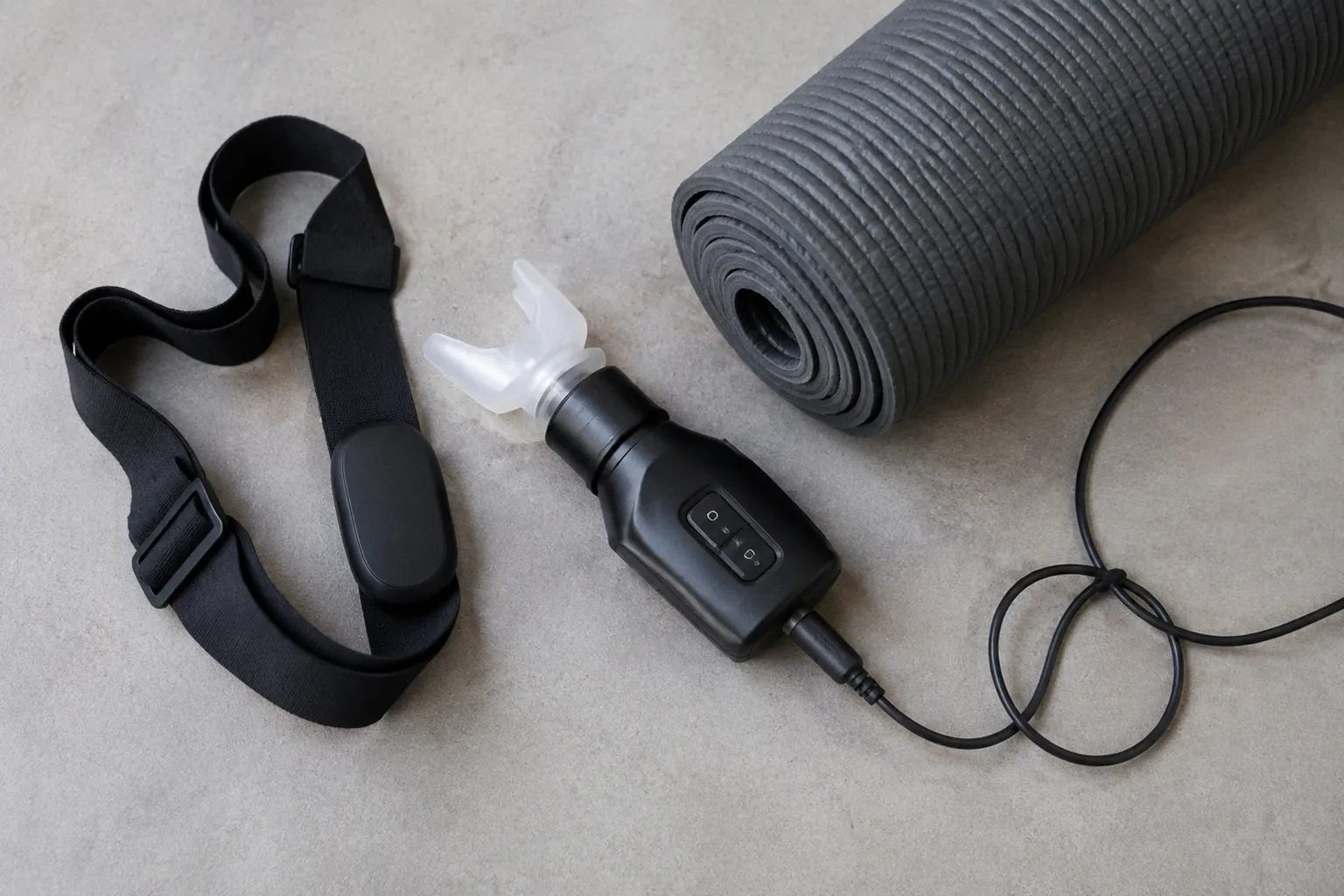
A 2:8 inhale-to-exhale ratio shifts blood flow toward reward circuits. That is the mechanism researchers at the German Institute of Human Nutrition Potsdam-Rehbruecke and Charité — Universitätsmedizin Berlin identified in a study published in Neuron, and it reframes how breathing protocols belong in clinical work.
Forty-one healthy adults completed a risk-based decision task while their breathing, heart activity, skin conductance, and pupil responses were recorded in parallel. Functional MRI tracked brain activity throughout. One condition used each participant's natural pace. The other slowed the cycle and stretched the exhale to a 2:8 ratio. Two concurrent changes appeared in the data. Heart rate dropped. Heart-rate variability rose. Activity increased in the ventromedial prefrontal cortex and the precuneus — regions tied to reward valuation and to the timing between heartbeats.
The behavioral result followed the physiology. Participants chose riskier options under the extended-exhale condition. The researchers traced the source of that shift. It was not reduced fear of loss. Loss sensitivity remained stable. The change came from heightened weighting of potential reward.
Prof. Soyoung Q Park, head of the Department of Decision Neuroscience and Nutrition at DIfE, summarized the premise: decisions emerge from the interplay between cognitive processes and current bodily state, and conscious regulation of that state through targeted breathing can actively steer the process.
What the ratio does mechanically
Inhale is sympathetic-dominant. Exhale is parasympathetic-dominant. A 2:8 ratio loads the cycle with vagal tone, the physiological substrate of heart-rate variability. Higher HRV correlates with flexible top-down control. In this study, that flexibility surfaced not as relaxation per se, but as a stronger signal from reward-valuation nodes when participants weighed gambles.
The clinical implication is specific. Slow breathing is often framed as a calming technique. The data suggest a second function: the protocol appears to bias the cost-benefit calculation toward the upside without suppressing the downside signal. The brain registers losses normally. It simply weights gains more heavily during the window.
What to test in session
A measurable starting point. Ask the client to breathe at a 2:8 ratio for ninety seconds before a decision the client has been avoiding, then log the outcome against a baseline decision on a comparable scenario. One variable at a time. Track whether the choice distribution shifts toward previously rejected options.
The same protocol can serve as an exposure bridge. Clients with chronic avoidance in financial, relational, or career decisions often show underweighted reward signals. Elevated HRV appears to recalibrate that weighting temporarily. The change is a window, not a permanent rewiring. Repetition under the same conditions closes it into habit.