Integrating AI with Traditional Medicine: A New Era for Wellness Practitioners
According to the Manila Times, Elite Asia Group has unveiled a new integrative wellness approach that pairs traditional Chinese medicine with AI technology — and you may feel a small tension gather…
Angela Dinsmore·updated September 22, 2026
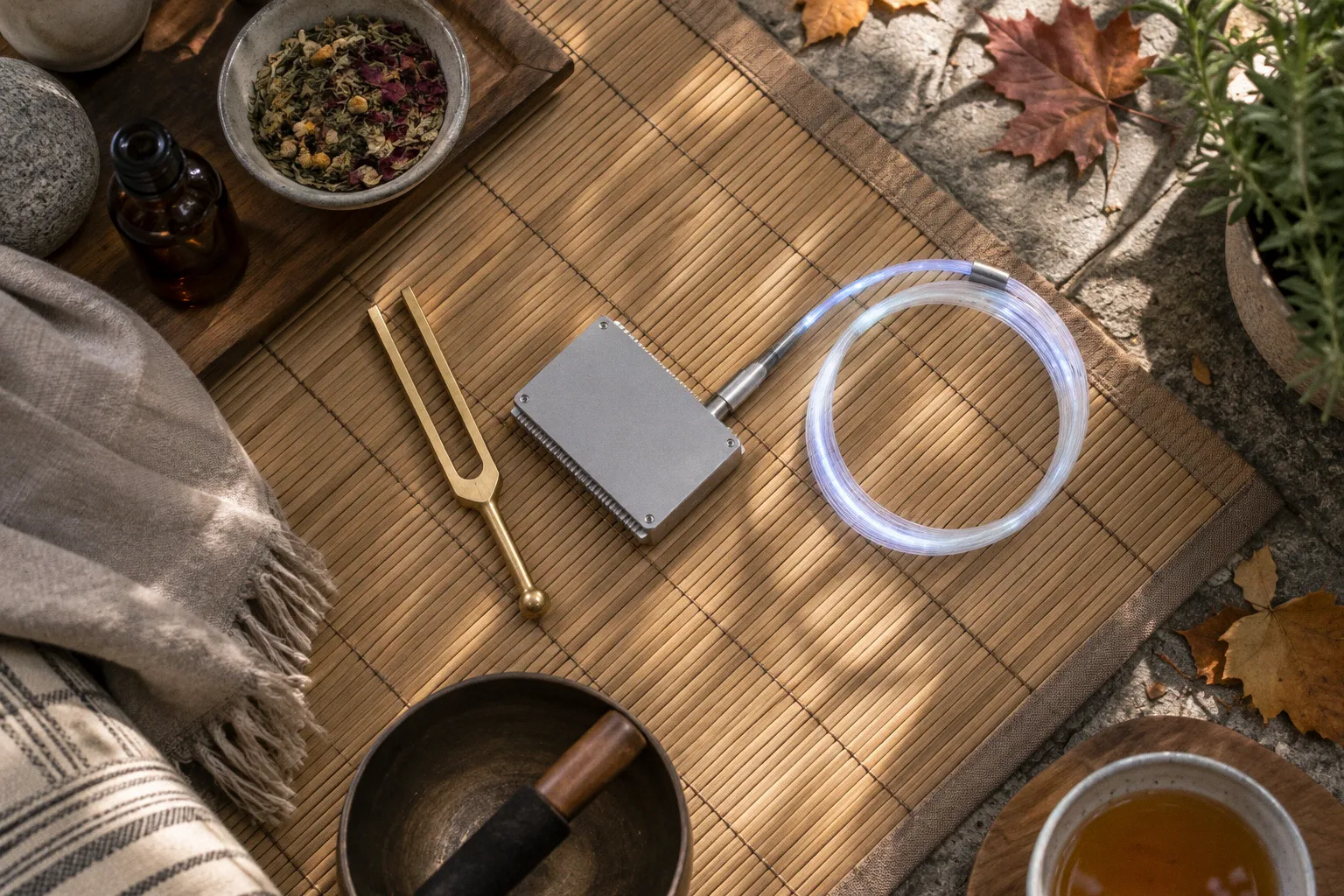
According to the Manila Times, Elite Asia Group has unveiled a new integrative wellness approach that pairs traditional Chinese medicine with AI technology — and you may feel a small tension gather in your chest before your mind has had a chance to evaluate the pairing. The timing is what gives this announcement its real weight: WHO, working with BIREME/PAHO, has now published its first global research agenda for traditional, complementary and integrative medicine covering 2025 through 2034. For practitioners in Reiki, coaching, or hypnotherapy, this matters less as a product launch than as a quiet signal that the broader field is being formally mapped.
Why the institutional shift is worth pausing with
PAHO reports that TCIM is used by billions of people across all WHO regions, yet less than 1% of global health research funding is currently directed toward it — a gap the new agenda is designed to address. The document identifies priority clinical areas including stroke, mental health, pain management, musculoskeletal conditions, cancer, metabolic and endocrine health, reproductive health, and childbirth, alongside healthy aging and health promotion. Cross-cutting issues flagged for specific attention include artificial intelligence, climate change and biodiversity, pandemic preparedness, and antimicrobial resistance. For the Region of the Americas specifically, the publication foregrounds sleep and psychosocial resilience, pain management, healthy aging, metabolic syndrome, and maternal and child health. WHO is explicit that the agenda is not a clinical guideline or regulatory instrument; it is a framework meant to guide investment, focus research efforts, and support evidence generation across health systems.
What this asks of your own practice
Separately, Inshorts reports that BRICS nations have backed greater cooperation on traditional medicine — another sign that cross-border scaffolding is forming around modalities long kept at the periphery of formal health policy. None of this obliges you to adopt any new tool or claim any new territory. What it does invite is a quieter check on your own work: where does your training hold steady, and where does it begin to feel pressed by the institutional tide rising around integrative practice? Often the body answers that question before the mind has finished framing it, so it is worth listening for that signal before reaching for any new vocabulary.
Before your next session, place one hand on your sternum, soften the breath through three slow cycles, and let your scope of practice settle into the room before your client walks in. That pause is the ground you already stand on — it does not need a research agenda, or any new piece of technology, to remain valid.