BRICS Nations Move to Standardize Traditional and Integrative Medicine
ICS just formally backed a new expert working group on Traditional, Complementary and Integrative Medicine (TCIM), according to India's Ministry of AYUSH.
Jeffrey Conroy·updated September 14, 2026
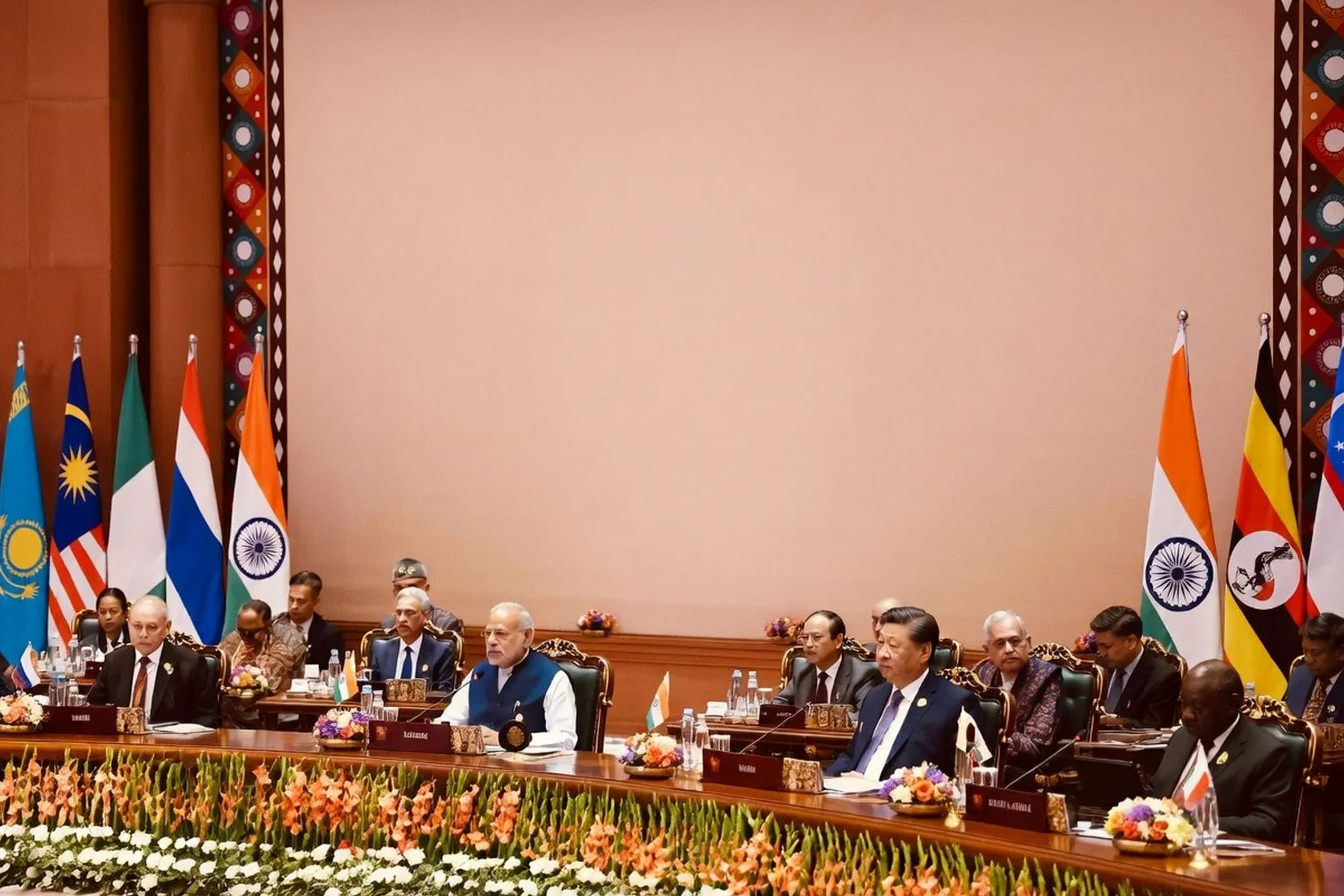
The New Delhi Declaration, adopted at the 18th BRICS Summit, treats traditional systems less as cultural heritage and more as a shared research infrastructure problem — one worth coordinating across pharmacopoeias, quality standards, and regulatory frameworks. For practitioners whose work sits outside the conventional medical mainstream, that's not a feel-good headline. It's a structural shift in who gets to define what counts as legitimate.
The default state most practitioners accept
You've probably felt it. You explain what you do — Reiki, hypnotherapy, NLP, biofield work — and the room politely files you under "wellness." You don't get the referral pipelines. You don't get the research grants. You don't get included when ministries talk about healthcare delivery. That isn't accidental. It's the default state when your modality has no formal seat at the policy table, and governments have nothing official to point to when citizens ask whether your work is real.
That's the friction worth naming. Because the next time someone asks whether hypnotherapy or energy healing belongs in a serious conversation about public health, the answer is about to stop being "depends who you ask."
What the declaration actually moves
According to the Ministry of AYUSH, the declaration welcomes a proposed BRICS Expert Working Group under the BRICS Health Track, designed as a platform for dialogue, collaboration, and exchange among member states on traditional medicine. It explicitly calls for research cooperation on medicinal plants and herbal preparations used for therapeutic and preventive purposes, and points to shared traditional pharmacopoeias as a foundation for developing safe, effective, and affordable therapeutic products.
Union Minister Prataprao Jadhav framed it as a step toward strengthening global cooperation in traditional medicine, with the proposed expert group providing a platform for member states to share knowledge, strengthen research, and advance evidence-based approaches. "India remains committed to taking forward Ayurveda and other traditional systems of medicine through scientific research, quality assurance and international collaboration," he said.
Secretary of the Ministry of AYUSH, Vaidya Rajesh Kotecha, noted that the declaration marked an important step toward advancing structured cooperation on TCIM, and that the working group could improve quality and regulatory approaches across member states. The development follows the BRICS Meeting on Traditional, Complementary and Integrative Medicine held in Chandigarh on July 21 under India's BRICS chairship.
The leverage point — and what to do with it
Here's what most people will do with this news: share it on social media, nod approvingly, and go back to running their practice exactly as before. That's the popular way. It's also the system-preserving way.
The systematic move is different. When governments start coordinating standards across borders, the documentation you keep — case studies, intake forms, outcome notes, contraindications screening, training credentials — stops being optional paperwork. It becomes the raw material regulators reach for when they decide what to formalize and what to leave outside the tent. Your bandwidth for "real" practice just got an upstream constraint.
So the diagnostic question: if a regulator in any BRICS country pulled your client files tomorrow, would they see a disciplined practitioner running a transparent process — or would they see a gifted intuitive whose method lives only in your head? That gap is the real work. Not the press release.