How Surgical Music Reduces Stress Responses in Liver Donors
Music played during surgery measurably calmed stress responses in living liver donors, according to a report distributed through Bioengineer.org.
Bernard Epping·updated September 12, 2026
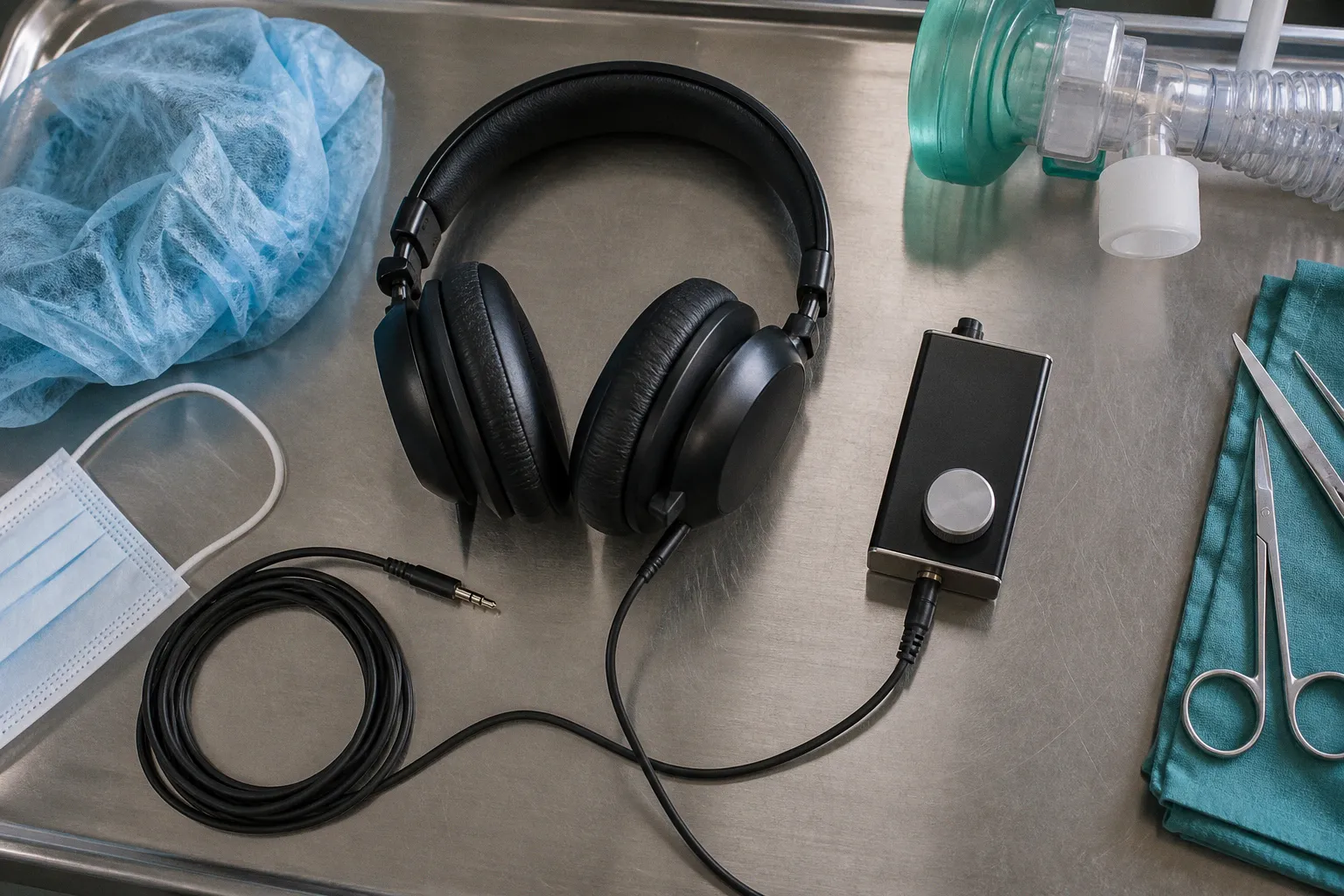
The finding aligns with what cognitive behavioral practice has long understood: the autonomic nervous system reads context before it reads content. A surgical suite registers as threat. The body prepares accordingly. Music intervenes at the level of appraisal.
The Mechanism Is Familiar Territory
Auditory input occupies attentional bandwidth. It competes with nociceptive signaling for cognitive resources. Threat appraisal softens. The body recalibrates. The patient emerges calmer. This is the operational logic of clinical hypnotherapy — sensory anchoring, paced input, attentional redirection. The toolkit overlaps directly with what the surgical protocol describes. Nothing in the headline is foreign to practitioners who work with procedural anxiety or pre-operative stress.
What the Context Adds
The clinical value of the report is contextual, not novel. The intervention was tested inside an extreme stressor. A patient on an operating table cannot use cognitive reappraisal. They cannot leave. They cannot move. The only available modulation is passive auditory input. If music can shift stress responses under those constraints, the application space below them is large. The laboratory conditions confirm what clinical work already observes.
What to Verify Before Applying This in Practice
- The mechanism is attentional, not musical. A metronome, a recorded voice, a binaural beat, or a guided script serves the same function if the auditory channel is reliably occupied. The medium is a delivery vehicle, not the active ingredient.
- Continuity beats intensity. Sustained low-volume input outperforms intermittent input. The nervous system requires unbroken anchoring, not periodic disruption.
- Patient selection matters. Endorsed input produces a different response than assigned input. Autonomy modulates the effect.
- Consent affects magnitude. Patients who choose their auditory input show larger shifts than those who receive it by default.
The liver donor cohort is an extreme sample. The mechanism generalizes downward. Procedural anxiety, dental work, phlebotomy, MRI scans, minor dermatological interventions — each produces a predictable stress cascade. Each allows for controlled ambient input. The intervention operates upstream of any pharmaceutical response.
For hypnotherapists working with surgical preparation, procedural phobias, or pre-operative anxiety, the report functions as a controlled demonstration. Language, rhythm, breath, and imagery are not supplementary tools layered onto a chemical intervention. They are the primary instrument. The operating theater simply provided the conditions to display what clinical work already observes.