What Is the HALT Method for Emotional Eating?
Every piece of advice you've ever received about emotional eating reduces to one noble, useless instruction: stop doing it.
Jeffrey Conroy·Updated: September 07, 2026·13 min read
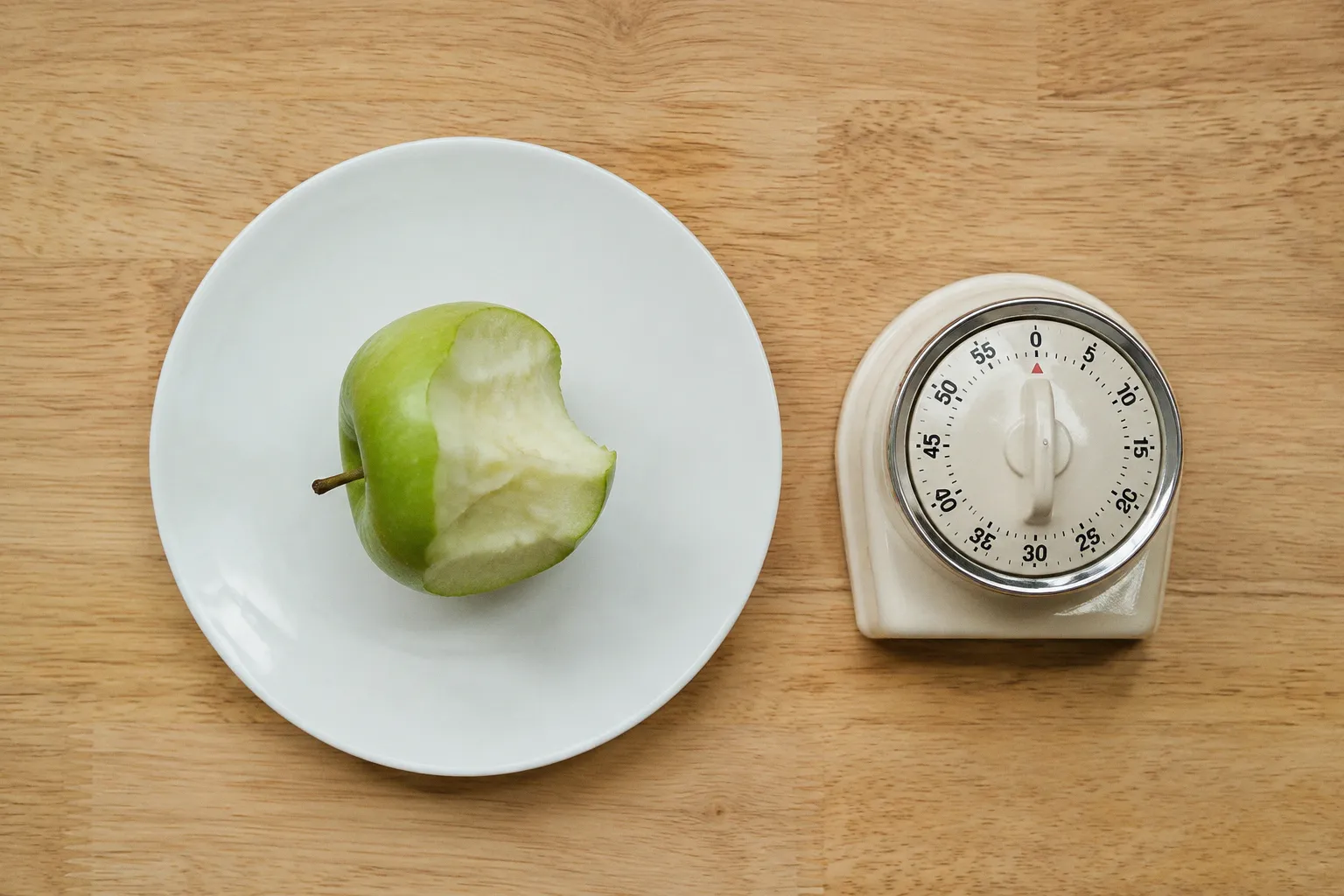
Count the willpower-first approaches you've tried — journaling prompts that assume insight equals change, meal plans that ignore the moment your hand reaches for the bag of chips at 11 p.m., affirmations that evaporate the second cortisol spikes. The failure rate on these strategies isn't a mystery. They treat the symptom while the system runs untouched underneath, and the system always wins.
The HALT method for emotional eating takes a fundamentally different position. It doesn't ask you to white-knuckle your way through a craving. It asks you to pause — for exactly long enough to answer one diagnostic question — before your default behavior executes. That pause is the entire mechanism. Four words — Hungry, Angry, Lonely, Tired — and a few seconds of honest assessment between the impulse and the action. The approach isn't new, isn't flashy, and won't sell a million copies of a self-help book. But it works because it targets the architecture of the habit loop rather than the motivation of the person trapped inside it.
Origins: A Recovery Tool That Doesn't Belong in a Diet Book
Before HALT became a wellness-adjacent acronym you'd find on Instagram infographics with soft gradients and cursive fonts, it lived in a far less aesthetic environment: 12-step recovery programs. The acronym was developed as a relapse prevention framework — a quick self-check for people navigating sobriety who needed to identify the internal state driving them toward substance use. The logic was blunt. If you could name the trigger, you could choose a different response instead of defaulting to the old one.
That origin matters, and not for nostalgic reasons. Recovery programs are ruthlessly practical about something most habit-change content refuses to acknowledge: the person in the grip of a craving is not making a decision. They're executing a script. The HALT method was designed to interrupt that script — not with motivation, but with a mechanical checkpoint that forces a gap in the automated sequence.
Over time, therapists and clinicians began applying the same framework to emotional and compulsive eating, because the underlying loop is structurally identical. An emotional trigger fires. The brain seeks the fastest known relief. Food delivers a short-term dopamine hit. The loop closes, reinforces itself, and strengthens with every repetition. The Cleveland Clinic and other clinical resources now list HALT as a recognized self-assessment tool for identifying the emotional states that drive impulse eating — not because it's trendy, but because the mechanism maps cleanly onto how stress-driven eating actually works in the nervous system.
The HALT method doesn't ask you to resist a craving. It asks you to diagnose what's actually driving it — and that single distinction changes the entire game.
None of this is about dieting. If you came here looking for a calorie-counting protocol or a macro split, you're in the wrong place. The HALT technique for emotional eating is a behavioral interruption tool. It operates at the decision point, not the meal plan.
Decoding the Four Triggers: What Your Craving Is Actually Telling You
The power of the HALT protocol lies in its specificity. It doesn't give you a vague prompt like "check in with yourself" — the kind of instruction that sounds wise and accomplishes nothing. It forces you to sort your internal state into one of four categories, and each category demands a different response. Treating all cravings as the same event is like treating all pain as a headache. Wrong diagnosis, wrong treatment. Let's go through each one with the precision it deserves.
Hungry
This is the trigger people dismiss first, which is a mistake that costs them the entire framework. Genuine physical hunger and emotional hunger feel superficially similar in the moment — a pulling sensation, restlessness, fixation on food — but they have different signatures if you know where to look.
Physical hunger builds gradually. It comes with recognizable bodily signals: stomach emptiness, low energy, mild irritability from dropping blood sugar. It can be satisfied by a range of foods. If someone put a plate of plain grilled chicken and vegetables in front of you when you were genuinely hungry, you'd eat it without complaint.
Emotional hunger arrives suddenly — often minutes after a triggering event or mood shift. It fixates on a specific texture or flavor: crunchy, sweet, salty, creamy. And critically, it isn't actually resolved by eating. The underlying feeling is still there after the food is gone, which is why the cycle repeats.
When the HALT check reveals the trigger is real hunger, the response is straightforward: eat something with substance. Foods that deliver fiber, protein, or both promote actual satiety — eggs, nuts, vegetables, hummus, low-fat cheese, legumes. These give your body what it's asking for. The problem isn't that you're eating. It's that when the trigger is emotional, you're reaching for the hyperpalatable shortcut that generates a dopamine spike without resolving anything.
Angry
Anger is a high-arousal state, and your body doesn't distinguish between the kind of anger that's metabolically useful (the kind that gets you to leave a bad situation) and the kind that's just burning through your cortisol reserves while you sit on the couch. Either way, you're flooded with stress hormones, and your brain is scanning for an outlet. Food provides a temporary channel — the mechanical act of chewing, the sensory distraction of taste. But it's a patch, not a fix. The anger doesn't metabolize with the calories.
What works for anger as an emotional eating trigger: physical discharge. A brisk walk — not a stroll, a walk with pace and purpose. Deep, controlled breathing that actually regulates your nervous system: four counts in, seven counts hold, eight counts out. Not the gentle "inhale peace, exhale gratitude" variety, but the deliberate, effortful kind that engages the parasympathetic response. If you have access to vigorous exercise, use it. The goal is to metabolize the adrenaline through your body rather than burying it under a sleeve of crackers.
Lonely
Loneliness might be the most underestimated driver of emotional eating, and it's the one people are least willing to name honestly. There's a reason for that reluctance — admitting you're lonely feels like admitting you're failing at something fundamental. But the HALT protocol doesn't care about your feelings about your feelings. It cares about what's actually happening.
Eating alone becomes a companion activity. Something to do with your hands, a sensory experience that fills a gap. The dopamine hit from hyperpalatable food briefly mimics the neurochemical reward of social connection. Briefly. Then it fades, and you're still alone, and now you also feel the physical discomfort of overeating layered on top of the original emotional state. The net position is worse.
The countermeasure for loneliness-driven cravings requires you to reach outward instead of inward. Contact a friend — a text message counts; it doesn't have to be a deep conversation. Engage in a hobby that occupies your attention and generates a different kind of focus. Leave the house and be around other humans, even passively — a coffee shop, a bookstore, a gym. If the loneliness is chronic and patterned, that's a separate system-level issue worth addressing on its own terms, not masking with pantry raids at 9 p.m.
Tired
Fatigue is a leverage point that most people dramatically undervalue. When you're tired, your prefrontal cortex — the part of your brain responsible for impulse control, planning, and rational evaluation — is functionally impaired. This isn't a metaphor. The research on sleep deprivation and decision-making is extensive and unambiguous: reduced sleep degrades your capacity for self-regulation. You're not choosing to eat badly. Your decision-making hardware is degraded, and your brain defaults to the path of least resistance — easy calories, fast satisfaction, instant relief.
When you're exhausted, you're not making bad choices. You're making no choices — your brain is executing the default script with reduced oversight.
The fix for tiredness as a trigger is deceptively simple and almost universally ignored: rest. Not "push through and reward yourself with something sweet." Actual rest. Screen-free breaks. Earlier bedtime. If you're reaching for food at 10 p.m. after a sixteen-hour day, the problem isn't your snack selection. It's your bandwidth. Address the bandwidth, and the craving often resolves on its own — because it was never really about food.
The Deliberate Pause: How to Actually Use HALT
Here's where most guides on the HALT method lose the plot. They explain the four categories beautifully and then leave you to "apply them" — as though knowing the acronym is the same as deploying it in the moment your hand is already inside the chip bag. It isn't. Knowledge without a deployment mechanism is decoration.
The mechanics of using HALT for emotional eating require a system, not awareness. Awareness alone changes nothing. You already know you shouldn't eat an entire sleeve of cookies at midnight. That knowledge hasn't stopped you yet. What interrupts the loop is a built-in friction point — a forced pause inserted between the impulse and the behavior.
Here's what that looks like in practice, step by step:
1. Notice the impulse and clock its speed. You want to eat, and the desire arrived fast — within seconds or minutes of something happening. That speed is itself a data point. Physical hunger builds gradually over hours. Emotional cravings surge. If it came on suddenly, you're likely not dealing with an empty stomach.
2. Stop. Physically stop. Don't negotiate with the impulse. Don't open the fridge "just to look." Don't stand in the kitchen telling yourself you'll decide in a minute while your hand opens a cabinet. Stand still for thirty seconds. Set a timer. The point is to create a gap in the automatic sequence — a gap wide enough for a different response to fit through.
3. Run the four-category diagnostic. Am I Hungry? Am I Angry? Am I Lonely? Am I Tired? Be honest, not clever. If you can't tell which one it is, that's an answer in itself — genuine physical hunger is identifiable. If you can't name the feeling, the urge probably isn't coming from your stomach.
4. Match the response to the actual trigger, not the craving. This is where the framework earns its keep. If you're hungry, eat real food with protein and fiber. If you're angry, move your body or regulate your breathing. If you're lonely, reach out to someone — anyone. If you're tired, close your eyes or go to bed. The response must address the real driver, not just suppress the surface symptom.
5. If the urge persists after addressing the trigger, run it again. Sometimes there's a second layer. You thought you were tired, but underneath the fatigue is anger about something you haven't processed. The HALT technique is a diagnostic tool, not a single-shot intervention. It requires honesty, and sometimes honesty means running the check twice.
The friction of this pause is the mechanism. You're not building willpower — willpower is a depletable resource that fails under stress, which is exactly when emotional eating peaks. You're inserting a checkpoint into an automated sequence. Think of it the way a two-step verification works on your email account: it forces confirmation before execution. It's a system guardrail, not a character test.
What the HALT Protocol Is Not
Precision about boundaries is what keeps a tool useful. Vague tools get abandoned because they don't tell you when they apply and when they don't. So let's be clear.
The HALT method is not a clinical treatment for binge eating disorder. If your eating patterns involve significant loss of control, rapid consumption of large quantities of food in short periods, and persistent shame or distress around eating, that's a clinical picture requiring professional intervention — not an acronym. The framework can complement clinical work, but it doesn't replace it.
The HALT protocol is not a diet. It doesn't tell you what to eat, how much, or when. It tells you how to decide whether eating is the right response to the current internal state. Those are different functions, and conflating them is how useful behavioral frameworks get diluted into uselessness.
And HALT is not a replacement for addressing root causes. If you're consistently lonely, that loneliness needs a structural solution — a reconnection strategy, a change in environment, possibly therapeutic work — not just a coping mechanism you deploy every evening. If chronic fatigue is driving your eating patterns, the answer isn't better snack choices; it's examining your sleep architecture, your workload, your recovery practices. HALT is the interrupt. The deeper work is separate, and skipping it means the interrupt eventually stops working because the underlying pressure keeps building.
| Trigger | What It Feels Like | What Actually Helps | What Doesn't |
|---|---|---|---|
| Hungry | Gradual onset, stomach signals, low energy | Balanced meal with protein and fiber | Ignoring it, skipping meals, coffee as a substitute |
| Angry | Sudden surge, tension, restlessness | Physical movement, structured breathing | Venting without action, numbing with food |
| Lonely | Emptiness, craving connection, restlessness | Reaching out to someone, changing your environment | Eating alone in front of a screen as a substitute |
| Tired | Heavy eyelids, low willpower, slow thinking | Actual rest, sleep, a screen-free break | Sugar or caffeine to "push through" |
Building the System Around the Signal
The HALT technique for emotional eating is, at its core, a signal-reading protocol. It doesn't suppress the signal. It doesn't moralize about it. It classifies it and routes it to the appropriate response. That's systems thinking applied to a deeply personal behavior, and it works precisely because it doesn't ask you to feel differently about food. It asks you to notice what you're actually feeling before food gets involved in the conversation.
The reason most people resist simple frameworks like this isn't that the framework is insufficient. It's that simplicity feels insufficient. We've been conditioned to believe that meaningful change requires dramatic intervention — a detox, a reset, a thirty-day challenge with a branded hashtag. But the behavioral research is consistent in the opposite direction: small, repeatable friction points inserted into automatic sequences outperform dramatic interventions every time. Not because they're more inspiring, but because they actually survive contact with real life — the tired Tuesday nights, the stressful Wednesday afternoons, the lonely Saturday evenings when motivation is at zero and the default script is running at full volume.
If you want a starting point that doesn't require equipment, a subscription, a coach, or a personality overhaul — write the four words on a card. H-A-L-T. Put it where you eat alone. The next time the impulse arrives — and it will arrive, probably tonight, probably when you're tired — read the card before you open the fridge. Answer the question honestly. Match the response to the actual trigger. That's the entire protocol.
The question isn't whether you know what Hungry, Angry, Lonely, and Tired mean. You've always known. The question is whether you'll use the pause the next time the impulse shows up — or whether you'll tell yourself you already know the answer, and keep executing the default.