Alcohol Relationship Reset: Understanding Every Stage
You know the feeling. It might settle in your chest on a Sunday morning—a low hum of regret, or perhaps just a question that won’t quiet down.
Angela Dinsmore·Updated: September 07, 2026·8 min read
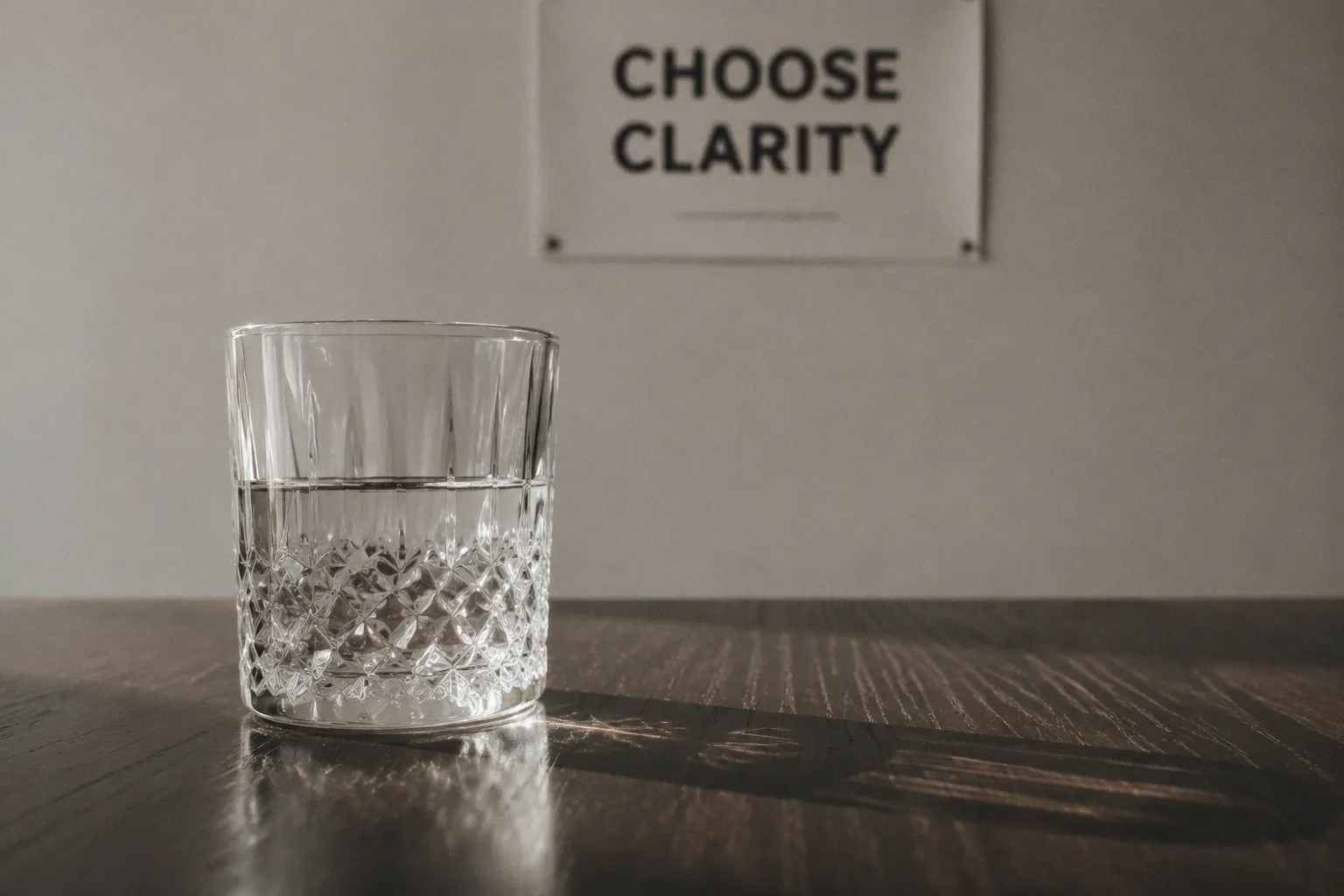
The Quiet Work of Changing Your Relationship with Alcohol
It’s the moment you realize your default mode for celebration, stress, or even boredom has become a familiar pour, a routine drink. This isn’t about dramatic rock bottoms; it’s about a growing awareness that the anchor you’ve been using might be pulling you somewhere you don’t want to drift. Changing this relationship isn’t about willpower alone. It’s a process of rewiring, a journey through defined psychological territory that moves you from unconscious habit to conscious choice.
The Psychology of Habit Transformation: Applying the Transtheoretical Model
Lasting change rarely happens in a sudden, dramatic leap. It unfolds in stages, a progression mapped out by psychologists James Prochaska and Carlo DiClemente in the 1970s. Their Transtheoretical Model (TTM) provides a resonant framework for understanding how we move from old patterns to new ways of being. Think of it not as a ladder you climb, but as a landscape you navigate. The terrain shifts beneath your feet, and recognizing where you are allows you to move with more grace and less self-judgment. This model applies powerfully to habits we’ve woven into our identity, like how we use alcohol.
Change isn't a switch you flip; it's a landscape you learn to read. The most profound shifts happen not in the moment of action, but in the quiet stages of preparation and reflection that precede it.
The five stages—Precontemplation, Contemplation, Preparation, Action, and Maintenance—aren’t checkboxes. They are states of readiness. Applying this to an alcohol reset means understanding that your hesitation in one stage isn’t failure; it’s simply part of the map. Each stage requires a different kind of attention, a different question to sit with.
From Precontemplation to Action: Navigating the Five Stages of Change
Let’s walk through this territory together, not as a rigid prescription, but as a way to locate yourself with compassion.
1. Precontemplation: The Unexamined "Why." Here, you’re not considering a change. Maybe you don’t see your drinking as problematic, or you feel defensive when it’s brought up. The physical sensation is often one of walls—a tightening in the chest, a quick deflection. The work here, if you sense any stirring at all, is simply to notice. Not to judge the drink, but to notice the function it serves. Is it a social lubricant? A numbing agent for stress? This stage is about planting the seed of awareness, nothing more.
2. Contemplation: The Unsettling Weighing. This is the stage of ambivalence. You see pros and cons to changing. You might feel a physical tension between what is and what could be—a push-pull in your shoulders or gut. You’re aware of the costs of your current habits but are uncertain about the benefits or feasibility of change. The task here is not to force a decision, but to explore the ambivalence. What are you truly afraid of losing? What are you hopeful of gaining? This is where the idea of an "alcohol relationship reset" begins to take shape, moving from abstract concept to personal inquiry.
3. Preparation: The Quiet Commitment. This is the most internal, often silent, stage. You’ve made a decision to act, perhaps within the next month. You might start gathering information, telling a trusted friend, or setting a start date. Physically, this can feel like a subtle settling, a readiness in your bones. You’re not yet in the active change, but you are organizing your energy toward it. You might research the "sober curious" movement—a term popularized by Ruby Warrington in 2018—which beautifully frames this exploration as a journey of curiosity rather than deprivation.
4. Action: The Conscious Re-patterning. Here, you actively modify your behavior. This is the most visible stage, but it’s not just about white-knuckling through sobriety. It’s about consciously substituting the old habit loop. If you always poured a drink at 6 PM, you’re now actively choosing a different path—a walk, a specific tea, a grounding breath practice. This stage demands the most energy. You’re not just removing alcohol; you’re building new neural pathways. The question changes from "I can’t drink" to "What do I want to feel right now, and what will genuinely get me there?"
5. Maintenance: The Integrated Lifestyle. This stage begins after you’ve sustained your new behavior for about six months. It’s not a plateau; it’s integration. The new patterns become more automatic, requiring less conscious effort. Your identity starts to shift—you’re not just someone trying not to drink; you’re someone who chooses how they engage with alcohol. The physical sensation here can be one of expansion, more space in the lungs, a steadier footing. Maintenance is about relapse prevention, but more importantly, it’s about reinforcing the positive gains of your new relationship.
The Sober Curious Movement: Redefining Your Relationship with Alcohol
The modern conversation around this reset has been profoundly shaped by the sober curious movement. This isn’t a dogma of permanent abstinence (though that’s a valid path for some). It’s a permission slip to question the default settings. It asks: What if you approached your drinking habits with the same curiosity you’d bring to learning a new skill or exploring a new city?
Recent data suggests you’re not alone in this curiosity. Gallup polling indicates that approximately 54% of U.S. adults report drinking alcohol, a figure that has declined from over 60% a decade earlier. Furthermore, the official 2025-2030 Dietary Guidelines for Americans explicitly recommend consuming less alcohol for better health. This is a societal shift, a collective exhale. The "sober curious" frame aligns perfectly with the Preparation and Action stages, providing a low-pressure, exploratory language for the process.
Sober curiosity isn't about declaring a lifetime ban. It's about granting yourself the freedom to ask, "Is this drink actually adding to my experience, or is it just a default I've never questioned?"
Evidence-Based Outcomes: What Happens After a 30-Day Reset?
One of the most practical and researched gateways into this process is the 30-day challenge—a concrete, time-bound commitment that sits squarely in the Action stage. Research led by Dr. Richard de Visser at the University of Sussex found that participants who completed a 30-day alcohol abstinence challenge (like Dry January) reported lasting benefits. Notably, they achieved roughly a 50% reduction in harmful drinking levels six to eight months later.
The power of the 30-day reset isn’t in the day count itself. It’s in the physiological and psychological data it provides. Your body begins to readjust. You experience sleep cycles without alcohol’s disruption. You navigate social situations and emotional ebbs without that chemical buffer. This period acts as a diagnostic. You learn which of your triggers are situational and which are deeply emotional. You gather the evidence you need to make a truly informed decision about your next steps in the Maintenance stage. It’s not a cure-all, but it is a powerful, evidence-based tool for breaking the habit loop and seeing your life with fresh, clear eyes.
Sustainable Maintenance: Building a Lifestyle Beyond Alcohol Dependency
Reaching the Maintenance stage is a significant achievement, but it’s not the finish line. It’s the beginning of a new way of living. The work now is to build a life that feels so authentically good that the old coping mechanisms lose their appeal. This is where the principles of habit loop interruption and building stress coping mechanisms become daily practice.
This looks like:
- Building a Supportive Environment: Consciously shaping your social circles and physical spaces to reflect your current values, not your past habits.
- Developing Emotional Agility: Creating a toolkit of healthier coping mechanisms—a specific breath for anxiety, a physical movement for restlessness, a journaling practice for overwhelm.
- Cultivating Sober Joy: Actively seeking and savoring experiences that are pleasurable, meaningful, and completely aligned with your clear-headed self. This rewires the brain’s reward system over time.
The goal of sustainable maintenance is to move from a focus on not drinking to a focus on what you are actively building. Your energy, once spent managing a habit, is now free to invest in your relationships, your work, your creativity, and your own sense of peace.
A Simple Grounding Practice for Moments of Craving
When you feel the pull of an old habit—when the cue fires and the craving begins—you don’t have to fight it with force. You can meet it with awareness. Try this: Place one hand on your chest and the other on your belly. Take a slow breath in, feeling your belly rise first, then your chest. Exhale, letting your shoulders drop. As you breathe, silently name what you’re feeling: “This is tension.” “This is restlessness.” “This is loneliness.” You are not the craving; you are the awareness observing it. By anchoring yourself in your body and naming the sensation, you create a pause—a sacred moment of choice between the impulse and the action. In that pause, your new story begins.